
Anyone who knows me probably knows how passionate I am about women’s healthcare, primarily due to my own experiences. I’m well aware that I was born into privilege, and as a result, I’ve had pretty easy access to relatively high-quality healthcare my entire life.
That is until I wanted to take control of my reproductive health.
I got on birth control when I was still in high school. I’ll leave the explanation brief: my parents wanted me to be protected against unwanted babies, I had been with my boyfriend for a while, and it just made sense.
The actual process of acquiring a birth control prescription was relatively straightforward (although it did take 2 months to get an appointment at an OBGYN because I was a new patient). The doctor came in and explained the different kinds of birth control (pill, ring, depo shot, patch) and asked which one I’d like. I settled on the ring because I wasn’t sure that I would remember to take a pill every day, but didn’t want a visible patch or a shot.
So that was that for about six months, until I started noticing that I wasn’t feeling like myself. I was angry ALL THE TIME and I would lash out at my boyfriend whenever he tried to be remotely intimate (seriously, a kiss would set me off sometimes). I couldn’t figure out what the change in my life was that would cause such mood swings. It felt like I was having the worst PMS rage 24/7. I also started getting panic attacks and my depression worsened quite a bit. It took me a few months to realize that maybe this was a result of the artificial hormones being pumped through my bloodstream, and I wasn’t just turning into a crazy woman.
But how could I be sure? My doctor didn’t mention anything about panic attacks, mood swings, or a complete aversion to being touched when she was explaining my options to me. I couldn’t really discuss the issue with my mom because anything to do with sex was pretty taboo even to my relatively liberal parents. I finally conjured up the courage to send an e-mail to my doctor and tell her what was going on. She offered to put me on a different prescription (the pill this time) and said “some methods work better for some women than others,” but didn’t take the time to explain that I was experiencing well-documented side-effects of hormonal birth control.
I switched to the pill, thinking that my life would be better. The mood swings went away but I still had panic attacks and moderate depression. I accepted that maybe these were just a part of who I was and moved on.
It wasn’t until I was in college five years later (and my panic attacks were reaching peak levels of awful with all of the stresses of moving out and being an “adult”) that I realized the pill wasn’t right for me either (which was an entire saga in its own right and I will be writing about that in part 2 of this story).
My experiences on birth control are by no means unusual. It’s hard to place the blame on any one person in this scenario as well. Is it the doctor’s fault for not adequately explaining side effects? Is it 17 year-old-me’s fault for trusting my doctor and not doing additional research about the prescriptions I was on? Did my sex-ed class fail me because we weren’t given an in-depth look at different options for birth control?
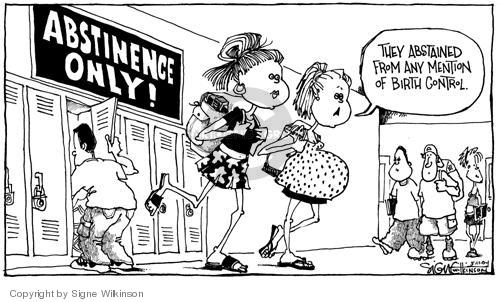
It’s difficult to say, but I do believe that I was and still am in a position where birth control was very easily accessible to me, and this can’t be said for countless women around this country. It is SO important that, as we move forward through 2017, we make it a nationwide priority to protect and EXPAND access to women’s healthcare as well as promote comprehensive sex-ed curriculum that provides information on methods of birth control OTHER than abstinence only (because we all know it just doesn’t work). We need to make sure all of the information is on the table for women to truly make informed decisions about their reproductive health.
Please keep this in mind going forward through 2017. There are still many who would fight to remove the institutions that provide even the most basic healthcare for women. The Affordable Care Act, even with its many imperfections, was still one of the biggest steps forward our country has made for women’s health in decades and we cannot let corporate interests or religious zealots take away what little we already have.
To wrap this up, I’ll leave you with the immortal words of Nasim Pedrad:
“If men could get pregnant, abortion clinics would be like Starbucks – two on every block and four in every airport. And the morning-after pill would come in different flavors like sea salt and cool ranch.”
Thanks for reading. Until next time
x
 Los Alexandra